
Spice
Synthetic Cannabinoids and Their Unpredictable Risks
Jul
A packet labelled “herbal incense”, “K2”, “Spice” or simply “not for human consumption” can conceal a much bigger gamble than the packaging suggests. Synthetic cannabinoids are often discussed as if they were a stronger version of cannabis. They are not. Their effects can be abrupt, intense and wildly inconsistent, even between products that look identical.
For people who know cannabis well, that distinction matters. Familiarity with THC does not reliably prepare someone for a compound that may act much more powerfully at the brain’s cannabinoid receptors, with no dependable way to judge its contents or strength before use.
What are synthetic cannabinoids?
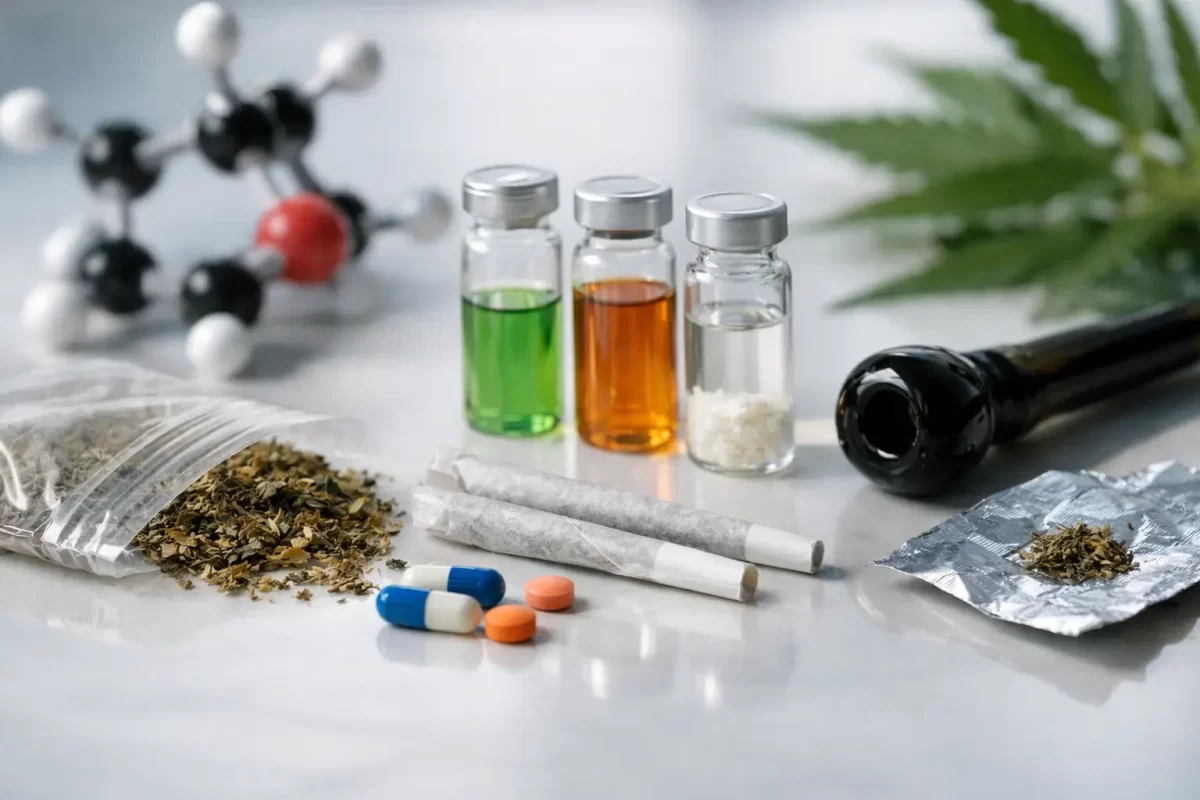
Synthetic cannabinoids are laboratory-made chemicals designed to interact with cannabinoid receptors in the body. They are sometimes sprayed on plant material, infused into liquids or placed onto paper products, then sold under a rotating collection of names. The chemical itself may change frequently, partly because manufacturers alter formulas as substances become prohibited or detected.
That creates a confusing market. A product sold under the same informal name may contain entirely different chemicals at different times. One batch may have little noticeable effect, while another may produce severe intoxication from a small amount. Labels and branding are not proof of identity, purity or consistency.
It is also worth separating these products from prescribed cannabinoid medicines and regulated cannabis products. A pharmaceutical cannabinoid preparation is made to a defined standard and used under clinical oversight. Unregulated synthetic cannabinoids are a different category, with a very different level of uncertainty.
Why synthetic cannabinoids can feel so different
THC, the primary intoxicating compound in cannabis, is a partial agonist at key cannabinoid receptors. Many synthetic cannabinoids can activate those same receptors more fully and, in some cases, far more strongly. That difference can turn a desired change in mood or perception into panic, confusion or medical distress with very little warning.
People may report relaxation, altered perception or a cannabis-like high at first. Others experience racing thoughts, paranoia, agitation, hallucinations, nausea, a pounding heartbeat or overwhelming fear. The effects are not merely a question of someone being inexperienced. Two people can react very differently to the same exposure, and the concentration may be unevenly distributed across the material.
The lack of a predictable dose-response relationship is central to the risk. With ordinary cannabis, a person may have some sense of their usual tolerance. With synthetic cannabinoids, tolerance to cannabis is not a reliable safety net. Neither is prior experience with a similarly named product.
Potency is only part of the problem
A potent compound is not automatically harmful in every context, but unregulated production adds layers of risk. The active chemical can be applied unevenly, creating hot spots. The identity of the compound may be unknown. It may also be mixed with other psychoactive substances without clear disclosure.
This is why appearance, smell and a confident seller description cannot confirm safety. A green herbal blend, a liquid or a paper sheet may look ordinary while containing a highly active substance. There is no dependable at-home visual check that tells you what is present.
The risks that deserve plain language
Synthetic cannabinoids have been associated with severe anxiety, psychosis, seizures, chest pain, dangerously raised heart rate, vomiting, loss of consciousness and acute kidney injury. Some people become highly agitated or confused and may take risks they would never normally take. Others collapse or become unresponsive.
Risk can increase when synthetic cannabinoids are combined with alcohol, stimulants, opioids, sedatives or other psychoactive drugs. Mixing substances makes it harder to know what is causing a reaction and can put extra pressure on the heart, breathing and nervous system. A hectic party setting, dehydration, lack of sleep and an underlying heart or mental-health condition can all make an unpredictable experience worse.
There is also a mental-health trade-off that is easy to underestimate. People with a personal or family history of psychosis, bipolar disorder, severe panic or schizophrenia may be especially vulnerable to destabilising reactions. Even without that history, intense paranoia or dissociation can be frightening and can last longer than expected.
If someone has taken them and feels wrong
The priority is not figuring out exactly which compound was involved. The priority is keeping the person alive, calm and away from immediate harm. Do not leave someone alone if they are severely confused, distressed, collapsing, having chest pain, fitting, struggling to breathe or becoming difficult to wake.
Call emergency services immediately for seizures, unconsciousness, breathing problems, severe chest pain, extreme agitation, dangerous behaviour or any suspected overdose. In the US, call 911. Be honest with responders about what may have been taken, when it was taken and whether alcohol or other substances were involved. Medical staff are there to treat the emergency, not to judge the story.
While waiting for help, move the person away from traffic, heights, crowds, sharp objects and overheating. Keep the environment quiet, speak slowly and avoid arguing with frightening beliefs or hallucinations. If they are unconscious but breathing, place them on their side in the recovery position. Do not give them more substances, force food or drink, make them walk it off, or leave them in a cold shower.
If possible, retain the packaging or take a photograph of it for medical staff, but do not delay calling for help to do this. The packaging may assist identification later, yet it should never be treated as proof of what was actually consumed.
Straight answers for people comparing products
Are synthetic cannabinoids legal?
Legal status depends on the specific chemical and location, and it changes quickly. Broad wording on packaging does not make a product lawful or safe for consumption. Beyond criminal-law questions, there may be workplace, driving, custody, travel and drug-testing consequences.
Can drug testing detect them?
Standard cannabis tests often look for THC metabolites, not every synthetic cannabinoid. However, specialised testing may identify some compounds, and formulas change often. Treating an unknown product as undetectable is a risky assumption, particularly where employment, probation, sport or driving is involved.
Is there a safe way to use them?
There is no reliable way to make an unidentified or inconsistently made synthetic cannabinoid safe. Avoiding use is the lowest-risk option. If someone chooses not to avoid it, the meaningful harm-reduction choices are to avoid mixing substances, avoid being alone, avoid driving or swimming, and make sure someone sober can call for help if needed. Those steps reduce some immediate dangers, but they do not solve the core problem of unknown contents and unpredictable potency.
Make the decision with clear eyes
The appeal is understandable: curiosity, convenience, a desire for a cannabis-like effect or the assumption that a legal-looking product must be mild. But synthetic cannabinoids are one of those categories where the label can create false confidence. The potential upside is difficult to separate from the uncertainty, while the downside can become serious quickly.
If you or a friend has had a frightening reaction, treat that as useful information rather than a challenge to push through. Choose distance from the product, talk to a health professional or local drug-support service if use is becoming hard to manage, and keep emergency help as the first move when symptoms turn severe.
