
Uncategorized
LSD Gel Tab Risks and What They Can Feel Like
Jul
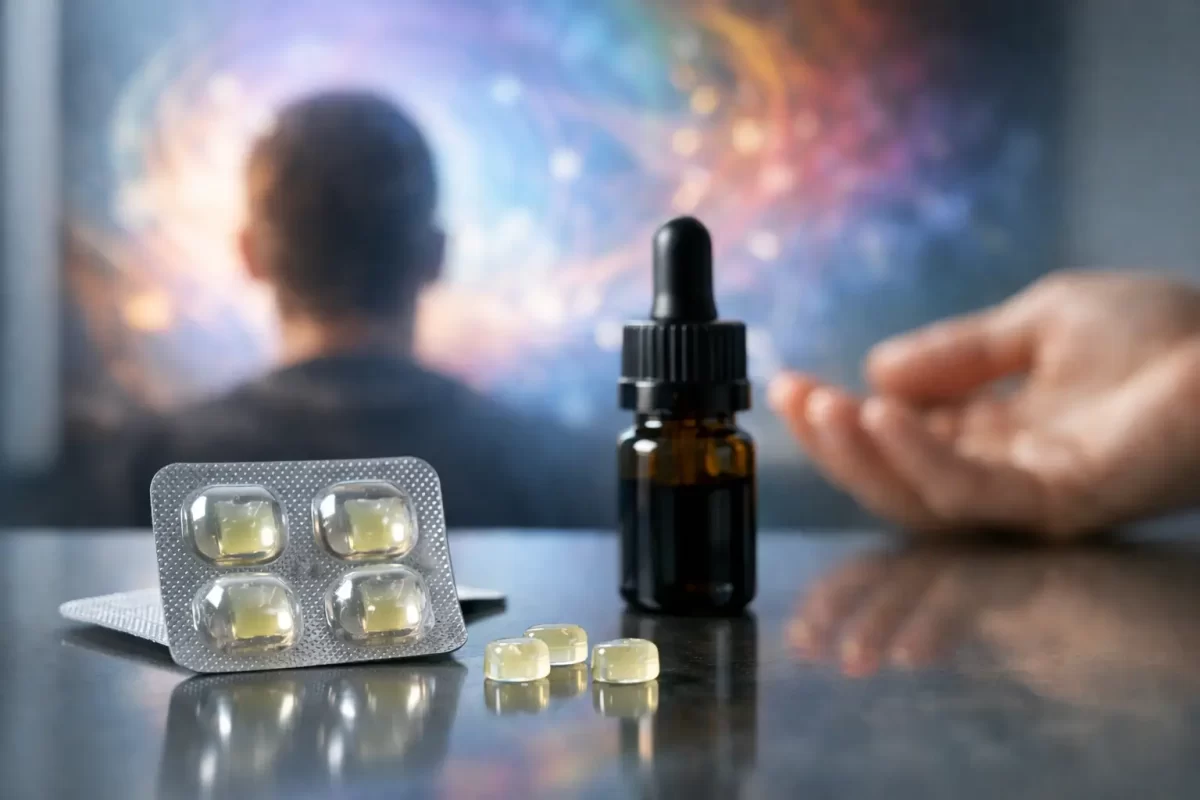
A gel tab can look tiny, neat and far less serious than it is. That is part of the problem. LSD gel tab risks are not limited to the experience itself: uncertainty around what is in the tab, how strong it is, how your mind and body respond, and where you are when it takes hold can all change the outcome dramatically.
Gel tabs are often treated as a premium or more reliable alternative to blotter because they are compact, colourful and easier to handle. But appearance is not proof of identity, strength or consistency. A small square can still lead to a long, intense and psychologically demanding experience that is difficult to stop once it has begun.
LSD Gel Tab Risks: Why the Form Matters
LSD is active in extremely small amounts, so small variations can make a meaningful difference. With gel tabs, the active substance may not be spread evenly across a batch. One tab may feel manageable while another that looks identical produces a far stronger effect. Heat, moisture, light and poor storage can also affect a product over time, although degradation does not make an unknown tab safe.
The other concern is misrepresentation. A gel tab cannot be identified by its colour, shape, logo or taste. Products sold as LSD may contain another psychoactive substance, a mixture of substances, or no LSD at all. Some substitutes can have a different onset, duration and risk profile. Never rely on a seller’s description, a friend’s reassurance or a familiar-looking design as evidence of what is actually present.
The practical risk is that people may make decisions based on false confidence. Taking more because the first effects seem slow, mixing substances to intensify the experience, or assuming a tab is mild because it is small can turn uncertainty into a difficult night.
The Experience Can Last Longer Than Expected
LSD effects can take time to emerge and may build gradually before becoming intense. The overall experience can last much of a day, with sleep sometimes difficult afterwards. That extended duration matters. If the setting becomes stressful, if you feel trapped in a crowded venue, or if panic starts to rise, there is no quick off-switch.
Common effects include altered visual perception, distorted time, racing thoughts, emotional intensity, dilated pupils, nausea, sweating and a raised heart rate. Some people experience wonder, connection or laughter. Others feel fear, suspicion, confusion or complete loss of control. The same person can have very different experiences on different occasions.
A difficult trip is not simply a matter of feeling uncomfortable. It can involve overwhelming terror, looping thoughts, paranoia, disorientation and unsafe behaviour. Someone may walk into traffic, fall, leave a safe place without telling anyone, or become convinced they are in immediate danger. At festivals, clubs and unfamiliar houses, noise, heat, crowds and strangers can make this more likely.
Mindset and setting are not clichés
Your state of mind before taking a psychedelic has real weight. Recent grief, anxiety, relationship conflict, exam pressure, poor sleep or a generally low mood can surface with far more force during an LSD experience. Equally, an environment that feels safe at the start can become unsettling once perception changes.
Being around trusted, sober people in a calm place may reduce some situational dangers, but it does not remove the possibility of distress. It also does not guarantee that a person with a hidden vulnerability will react predictably.
Mental Health Risks Need Honest Attention
LSD can intensify existing mental-health symptoms, particularly anxiety, panic, paranoia and obsessive thinking. People with a personal or family history of psychosis, schizophrenia or bipolar disorder face a higher potential risk of serious psychiatric effects. For some, an experience can trigger mania, prolonged paranoia or psychotic symptoms requiring urgent medical care.
There is also a smaller but genuine risk of persistent perceptual changes after psychedelic use. This may involve visual static, trails, flashes, altered colour perception or a sense that things still look unreal days or weeks later. Some people describe these symptoms as manageable; for others they are frightening and disruptive. There is no reliable way to predict who will experience them.
If you are already struggling with your mental health, are taking medication for a psychiatric condition, or have recently stopped such medication, the sensible move is not to treat a gel tab as a shortcut to relief or insight. Psychedelics can bring difficult material to the surface without providing the support needed to process it.
Interactions Can Change the Risk Picture
Mixing substances is where many preventable problems begin. Alcohol can impair judgement and make it harder to recognise escalating anxiety or dehydration. Cannabis may make the visuals and thought patterns feel much stronger, and for some people it sharply increases panic or paranoia. Stimulants can add strain to the heart, increase agitation and make an already intense environment feel chaotic.
Prescription medicines matter too. Antidepressants, mood stabilisers, antipsychotics and other psychiatric medicines can alter effects or create complicated risks depending on the medicine and the individual. Do not stop prescribed treatment abruptly in order to take LSD. That can be dangerous in its own right. A pharmacist or clinician can offer confidential advice on medication interactions without judgement.
Avoid driving, cycling in traffic, swimming, climbing, operating equipment or making major decisions while under the influence and until you are properly rested. Feeling more alert than usual is not the same as being capable of making safe decisions.
When a Difficult Trip Becomes a Medical Emergency
Not every frightening psychedelic experience needs an ambulance, but some situations clearly do. Seek urgent medical help if someone has chest pain, seizures, collapses, struggles to breathe, has dangerously high body temperature, becomes severely confused or violently agitated, or is at immediate risk of harming themselves or another person.
If help is needed, be straightforward with medical staff about what may have been taken, when it was taken and whether alcohol or other drugs were involved. Their priority is treatment, not judgement. Do not leave a distressed person alone, argue with their beliefs, restrain them unless there is an immediate safety issue, or try to force food, drink or more substances on them.
A quieter space, a calm voice, simple reassurance and removal from hazards can help while waiting for support. Keep sentences short. Remind them that the effects are temporary and that they are not in trouble. If you are in the UK, call 999 in an emergency. Elsewhere, contact your local emergency number.
Reducing Avoidable Harm Around Gel Tabs
The lowest-risk choice is not to take an unknown psychoactive substance. For adults who may choose otherwise, the most useful harm-reduction mindset is to slow down rather than chase a bigger experience. Do not take a tab in response to peer pressure, during a mental-health crisis, before work or travel, or when you cannot stay somewhere safe for the full duration and recovery period.
Be especially cautious about products with unverifiable claims of extraordinary strength or purity. Independent drug-checking information, where available, is more meaningful than branding or marketing language. It cannot promise that an experience will be easy, but knowing that uncertainty exists can prevent reckless assumptions.
It is also worth planning for the after-effects. A long night without sleep can leave people emotionally raw, anxious and physically drained. Keep the following day clear where possible, eat regular food once you can, drink sensibly, rest and speak to someone trustworthy if the experience has left you shaken. If anxiety, low mood, derealisation or unusual perceptions continue, seek professional support rather than hoping it will simply disappear.
The most grounded approach to LSD gel tab risks is to respect the gap between a tiny tab and a major psychological event. Curiosity does not have to mean carelessness. The more honest you are about uncertainty, mental health and your surroundings, the better placed you are to protect yourself and the people around you.
